Here's a breakdown:
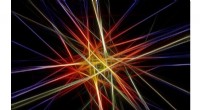
* Origin: Diverging rays usually originate from a point source of light, like a light bulb or a star.
* Direction: The rays spread out from the point source, moving away from each other.
* Effect: The diverging rays create a wider and weaker beam of light as they travel further away from the source.
Examples of diverging rays:
* A flashlight beam: The light from a flashlight spreads out as it travels.
* Sunlight: Sunlight, originating from the sun, appears to diverge as it reaches the Earth.
* Light from a candle: The light from a candle spreads out in all directions.
Contrast with Converging rays:
Converging rays are the opposite of diverging rays. They come together at a point, like when a magnifying glass focuses sunlight.
Let me know if you'd like to know more about converging rays or other optics concepts!