1. Relativity of Motion:
* No Absolute Rest: There's no universal "still" point in the universe. Everything is in motion relative to something else.
* Relative Velocity: The speed and direction of an object depend on the observer's frame of reference. For example, a person walking on a train is stationary relative to the train but moving relative to someone standing on the platform.
2. Relativity of Simultaneity:
* Time is not Absolute: Two events that appear simultaneous to one observer might not be simultaneous to another observer in a different frame of reference. This is particularly true at very high speeds approaching the speed of light.
* Consequences: This has profound implications for our understanding of causality and the order of events.
3. Length Contraction and Time Dilation:
* Special Relativity: Einstein's theory of Special Relativity predicts that moving objects appear shorter (length contraction) and their clocks run slower (time dilation) from the perspective of a stationary observer.
* The Faster the Speed: The more significant these effects become, becoming noticeable only at speeds approaching the speed of light.
4. Gravitational Time Dilation:
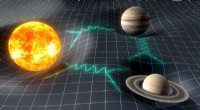
* General Relativity: Einstein's theory of General Relativity states that gravity affects the flow of time. Stronger gravity slows down time.
* Global Positioning System (GPS): This effect is accounted for in the operation of GPS satellites, which experience a slightly different gravitational field than observers on Earth.
Examples of Frame of Reference Impact:
* Throwing a Ball: The trajectory of a ball thrown from a moving car appears different to someone inside the car and someone standing outside.
* Light Speed: The speed of light is constant for all observers, regardless of their motion. This is a cornerstone of Special Relativity.
* Black Holes: The extreme gravity of black holes causes extreme time dilation, making time effectively stop at the event horizon.
Conclusion:
Frame of reference is crucial to understanding the physical world because it reveals that our perception of space, time, and motion is relative. It's not just about how we observe things, but about the fundamental nature of reality itself.