The new millennium has brought with it a surge of exciting developments in physics, transforming the field from a predominantly theoretical discipline to one deeply entwined with cutting-edge technologies. Here are some defining characteristics of physics in the 21st century:
1. Unveiling the Mysteries of the Universe:
* Cosmology and Particle Physics: Exploring the origins of the universe, the nature of dark matter and dark energy, and the search for new particles like the Higgs boson have taken center stage.
* Gravitational Waves: The direct detection of gravitational waves, predicted by Einstein's general relativity, opened a new window into the universe, allowing us to study the most violent events like black hole collisions.
* Exoplanet Research: The discovery of thousands of planets outside our solar system has fuelled research into their formation, habitability, and potential for hosting life.
2. The Quantum Revolution:
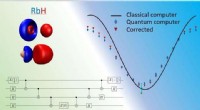
* Quantum Computing: The development of quantum computers promises to revolutionize fields like medicine, materials science, and artificial intelligence by harnessing the power of quantum mechanics.
* Quantum Information Science: Explores the potential of quantum phenomena for secure communication, advanced sensors, and more efficient computation.
* Nanotechnology: The manipulation of matter at the atomic and molecular level leads to advancements in materials science, electronics, and medicine.
3. Interdisciplinary Collaboration:
* Astrophysics and Biology: Exploring the origins of life, the potential for life beyond Earth, and the influence of cosmic events on biological evolution.
* Physics and Medicine: Developing new diagnostic and therapeutic tools based on quantum physics, nuclear physics, and medical imaging.
* Physics and Climate Change: Understanding the complex climate system, developing sustainable energy sources, and addressing the challenges of climate change.
4. Bridging Theory and Experiment:
* Large-Scale Experiments: The Large Hadron Collider (LHC) and other massive experimental facilities enable physicists to test fundamental theories at unprecedented energy levels.
* Precision Measurements: Advanced technologies allow for incredibly precise measurements, leading to new discoveries and refinements of existing theories.
* Computer Simulations: Powerful computers are used to simulate complex physical phenomena, providing insights into the nature of matter and energy.
5. The Future of Physics:
* Unification of Fundamental Forces: The quest to unify the fundamental forces of nature, including gravity, electromagnetism, and the weak and strong nuclear forces, remains a key goal.
* Beyond the Standard Model: Exploring the limitations of the Standard Model of particle physics and searching for new physics beyond it.
* The Role of Artificial Intelligence: AI is increasingly used in physics research, from analyzing large datasets to developing new theoretical models.
In conclusion, physics in the new millennium is a vibrant and dynamic field driven by innovation, collaboration, and a relentless pursuit of understanding the fundamental laws of the universe. This journey of discovery continues to push the boundaries of human knowledge and shape the future of science and technology.