1. Particles as point-like objects:
* In classical physics, particles are often treated as point-like objects with no internal structure. They can have *translational* motion, meaning they move from one place to another, but they don't vibrate in the traditional sense.
2. Particles with internal structure:
* Atoms: Atoms are not point-like; they have a nucleus and electrons. The electrons can be excited to higher energy levels, and as they transition back down, they emit light. This could be considered a type of vibration, but it's more accurately described as quantum excitation and de-excitation.
* Molecules: Molecules are made of multiple atoms connected by bonds. These bonds can vibrate, stretching and bending in various modes. This is a true vibration and plays a key role in molecular spectroscopy.
* Elementary particles: These are the fundamental building blocks of matter, like quarks and leptons. They are point-like according to current understanding, but some theories suggest they might have internal structure. We don't yet have a good understanding of whether these particles "vibrate."
3. Quantum fluctuations:
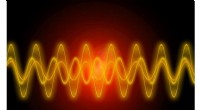
* In quantum mechanics, particles are described by wavefunctions. Even in their ground state, these wavefunctions are not perfectly static; they undergo quantum fluctuations that can be interpreted as a kind of "vibration." This is a purely quantum phenomenon with no classical analogue.
In summary:
* "Natural vibration" of particles can mean different things depending on the context.
* For classical particles, there's no real concept of vibration; they only move translationally.
* Atoms and molecules exhibit vibrational modes due to their internal structure.
* Elementary particles may or may not have internal structure and vibration, but our current understanding is limited.
* All particles experience quantum fluctuations, which could be considered a form of inherent "vibration" in the quantum realm.