1. Understand the Concepts
* Gravitational Force: The force of attraction between any two objects with mass. It's described by Newton's Law of Universal Gravitation:
F = G * (m1 * m2) / r^2
* F = Gravitational force
* G = Gravitational constant (6.674 × 10^-11 m^3 kg^-1 s^-2)
* m1 and m2 = Masses of the two objects
* r = Distance between their centers
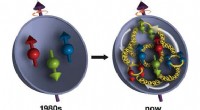
* Hydrogen Atom: A hydrogen atom consists of one proton (the nucleus) and one electron orbiting it.
2. Gather the Necessary Information
* Mass of electron (m1): 9.109 × 10^-31 kg
* Mass of proton (m2): 1.672 × 10^-27 kg
* Distance between electron and proton (r): 0.5292 Å (angstroms). Convert this to meters: 0.5292 Å * (1 m / 10^10 Å) = 5.292 × 10^-11 m
3. Calculate the Gravitational Force
Plug the values into the formula:
F = (6.674 × 10^-11 m^3 kg^-1 s^-2) * (9.109 × 10^-31 kg) * (1.672 × 10^-27 kg) / (5.292 × 10^-11 m)^2
F ≈ 3.62 × 10^-47 N
Important Note:
* The gravitational force between the electron and proton in a hydrogen atom is incredibly weak. This is because the masses of these particles are so small.
* The electrostatic force between the positively charged proton and the negatively charged electron is much stronger. This electrostatic force is what keeps the electron bound to the atom.
Let me know if you have any more questions.