1. Lack of Suitable Materials:
* Energy Levels: X-ray photons possess extremely high energy, requiring materials with very closely spaced energy levels to create the necessary population inversion (more atoms in an excited state than the ground state). Finding materials with such precise energy levels is incredibly difficult.
* High Energy Transitions: X-ray transitions involve the ejection of inner shell electrons, resulting in highly unstable states that decay rapidly. This short lifetime makes it difficult to maintain a population inversion for sustained stimulated emission.
2. Optical Cavities:
* X-ray Reflection: Traditional mirrors used in optical cavities to reflect laser light are ineffective at X-ray frequencies. X-rays tend to penetrate most materials rather than reflect. Developing efficient X-ray mirrors is a major challenge.
* Diffraction: X-rays have extremely short wavelengths, making them highly susceptible to diffraction. This can lead to significant energy loss and beam divergence within an X-ray cavity, hindering laser action.
3. Pumping Mechanisms:
* High Energy Requirements: Creating a population inversion in X-ray lasers necessitates extremely high energy pumping sources. This often involves using powerful lasers or particle accelerators, which can be complex and expensive to operate.
* Inefficient Pumping: The energy transfer efficiency from pumping sources to the active medium is generally low at X-ray frequencies. This limits the achievable gain and makes it challenging to sustain laser action.
4. Limited Applications:
* Limited Materials Interaction: While X-ray lasers have great potential for scientific research, their applications in other fields are limited due to the strong penetration power of X-rays, which makes them less suitable for material processing or communication.
Ongoing Research:
Despite these challenges, significant progress has been made in the field of X-ray lasers. Researchers are actively exploring alternative approaches such as:
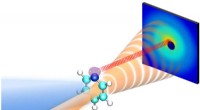
* Free Electron Lasers (FELs): These lasers use relativistic electrons moving in a magnetic field to generate coherent X-rays.
* High-Harmonic Generation (HHG): This technique involves focusing intense laser pulses onto a gas target to generate high-frequency harmonics, some of which fall in the X-ray regime.
While achieving practical X-ray lasers is still a significant scientific challenge, these ongoing efforts offer promising avenues for future breakthroughs.