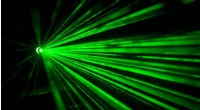
* Light itself: This is the most obvious answer. Light, being an electromagnetic wave, travels at the speed of light in a vacuum, which is approximately 299,792,458 meters per second.
* Other electromagnetic radiation: This includes things like radio waves, microwaves, X-rays, and gamma rays. All forms of electromagnetic radiation travel at the speed of light in a vacuum.
* Massless particles: According to Einstein's theory of relativity, anything that has no mass must travel at the speed of light. This includes:
* Photons: The particles that make up light.
* Gluons: Particles that hold quarks together within protons and neutrons.
* Gravitons: Hypothetical particles that carry the force of gravity (though their existence is still unproven).
Important note: Nothing with mass can travel at the speed of light. As an object approaches the speed of light, its mass increases infinitely, requiring an infinite amount of energy to accelerate it further.