1. Refraction:
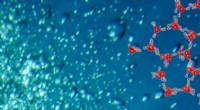
* The light wave will bend as it enters the water. This is because the speed of light is slower in water than in air.
* The angle of refraction (the angle between the refracted ray and the normal to the surface) will be smaller than the angle of incidence (the angle between the incident ray and the normal). This is due to Snell's Law, which states:
* n1 * sin(θ1) = n2 * sin(θ2)
* where n1 and n2 are the refractive indices of air and water, respectively, and θ1 and θ2 are the angles of incidence and refraction.
2. Reflection:
* A portion of the light wave will also be reflected back into the air.
* The angle of reflection (the angle between the reflected ray and the normal) will be equal to the angle of incidence.
3. Polarization:
* The reflected light will be partially polarized, meaning that the electric field of the light wave will be more aligned in a particular direction. This effect is most pronounced when the angle of incidence is close to Brewster's angle, which for air-water is around 53°.
4. Attenuation:
* Some of the light wave's energy will be absorbed by the water, resulting in a slight decrease in the intensity of the light wave as it travels through the water.
In summary:
* The light wave will bend towards the normal as it enters the water (refraction).
* A portion of the light wave will be reflected back into the air.
* The reflected light will be partially polarized.
* The light wave will experience some attenuation as it travels through the water.
The exact proportions of the reflected, refracted, and absorbed light will depend on the angle of incidence, the wavelength of the light, and the properties of the water.