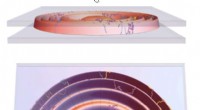
1. Friction: This force opposes the motion of an object in contact with a surface. It arises from the microscopic irregularities between the surfaces, causing resistance to movement. Friction can be categorized into various types, including static friction (when an object is at rest), kinetic friction (when an object is moving), and rolling friction (when an object is rolling).
2. Air resistance (or drag): This force acts on objects moving through a fluid, like air or water. It arises from the collision of the object with the fluid molecules, creating a resistance to the object's motion. Air resistance increases with the object's speed and surface area, as well as the density of the fluid.
These two forces are often the main contributors to slowing down an object's motion. There are other forces that can slow down an object, such as tension in a rope or the force of gravity acting against upward motion, but they are not as common or as fundamental as friction and air resistance.