1. Perfect Vacuum:
* Theoretical Ideal: A perfect vacuum is a theoretical construct where there is absolutely no matter present, not even a single atom or molecule.
* Impossible to Achieve: It's impossible to create a perfect vacuum in the real world because even the best vacuum chambers still contain a few particles.
2. Partial Vacuum:
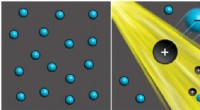
* Real-World Scenario: This is a more realistic situation, where the density of matter is significantly lower than that of atmospheric pressure.
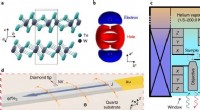
* Examples: Examples include the space between planets, the inside of a vacuum cleaner, or the interior of a vacuum chamber used for research.
Importance of Vacuum in Physics:
* Studying Matter: Vacuums provide a controlled environment for studying the behavior of matter under extreme conditions, such as in particle physics experiments or for observing the properties of materials at very low pressures.
* Light Propagation: Vacuums are the ideal medium for the propagation of light, as there's no matter to interact with and slow it down. This is why the speed of light in a vacuum is considered the fastest possible speed.
* Thermodynamics: Vacuum is an important concept in thermodynamics, as it helps define the absolute zero temperature and plays a role in various thermodynamic processes.
Key Properties of a Vacuum:
* Low Pressure: The defining characteristic of a vacuum is its extremely low pressure, significantly lower than atmospheric pressure.
* Absence of Matter: Ideally, a vacuum contains no matter at all, but in reality, there are always a few residual particles.
* Heat Transfer: Heat transfer in a vacuum is primarily through radiation.
* Sound Propagation: Sound cannot travel in a perfect vacuum as it requires a medium to propagate.
Understanding the concept of vacuum is essential for many branches of physics, from astrophysics to materials science, and it has numerous applications in various technologies.