An object at rest stays at rest and an object in motion stays in motion with the same speed and in the same direction unless acted upon by an unbalanced force.
Here's a breakdown:
* Object at rest: If an object is stationary and no forces are acting on it, it will remain stationary. Think of a book on a table - it won't spontaneously start moving unless something pushes or pulls it.
* Object in motion: If an object is moving and no forces act on it, it will continue moving at the same speed and in the same direction forever. In reality, friction and other forces will eventually slow it down, but in a perfect scenario with no external forces, it would continue indefinitely.
Examples:
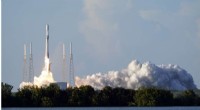
* Spacecraft in deep space: A spacecraft far from any planets or stars will continue moving in a straight line at a constant speed because there's very little gravity or other forces acting on it.
* A puck on a frictionless surface: If you push a puck across a perfectly smooth, frictionless surface, it will glide along forever at the same speed and direction.
Key points:
* The Law of Inertia only applies if there are no unbalanced forces. If there are multiple forces acting on an object, the net force determines its motion.
* Inertia is the tendency of an object to resist changes in its motion. The more massive an object is, the more inertia it has.
Let me know if you have any other questions!