1. Mass and Acceleration:
* Electrons are incredibly light. An electron's mass is about 9.11 x 10^-31 kilograms. This is *tiny* compared to even a single water molecule.
* Gravity's pull is proportional to mass. Because electrons are so light, the force of gravity on them is extremely weak.
* Acceleration due to gravity is constant. While gravity will *technically* affect the electrons, the acceleration it produces is minuscule. The electrons are moving so fast that the gravitational force is negligible in comparison to other forces acting on them.
2. The Electron Gun:
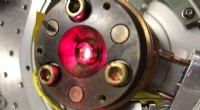
* Electric fields are much stronger than gravity. The electron gun uses an electric field to accelerate the electrons. These electric fields are far more powerful than the gravitational field, and they completely dominate the motion of the electrons.
* Vacuum environment. Electron guns operate in a vacuum to prevent the electrons from colliding with air molecules, which would scatter them. This eliminates another source of deflection.
3. The Scale of Observation:
* Time and distance. The electrons in the beam travel very short distances in a very short time. The effect of gravity over these small scales is practically impossible to observe.
In Conclusion:
While gravity does act on electrons, its effect is so small compared to the forces governing the electron beam that it's practically irrelevant. The electrons are primarily controlled by the electric fields within the electron gun and their own high velocity.