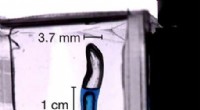
The Experiment
The setup involves suspending a weight from two parallel wires of equal length. When the weight is set in motion, it exhibits an unusual oscillating behavior. The key aspects are:
* Oscillation: The weight does not swing back and forth in a simple pendulum motion. Instead, it rotates or twists around the suspension wires.
* Frequency: The oscillation frequency is significantly lower than what would be expected for a simple pendulum of the same length.
* Precession: The oscillation plane often appears to precess, meaning it slowly rotates around the vertical axis.
Interpretations and Theories
There's no universally agreed-upon explanation for the Bifilar Suspension's behavior, making it a fascinating topic for discussion:
1. Simple Pendulum Model: Some argue that the experiment can be explained by treating the system as two simple pendulums connected at the weight. The twisting motion is then attributed to the interaction between the two pendulums. However, this model fails to account for the lower-than-expected frequency and precession.
2. Torsional Oscillation: Others propose that the system is primarily undergoing torsional oscillations. This means the weight is twisting around the suspension wires due to the inherent elasticity of the wires. This explanation aligns with the observed low frequency and precession, but it might not fully capture the complexity of the motion.
3. Earth's Rotation: Some theories suggest that the Earth's rotation plays a role in the observed precession. However, this explanation is contested as the effect of Earth's rotation is likely too small to be the primary driver of the precession.
4. Complex Dynamics: The Bifilar Suspension system might be better understood as a complex dynamic system with multiple degrees of freedom. This means the motion involves a combination of different types of oscillations, including simple pendulum, torsional, and even small rotations around the vertical axis.
Additional Considerations:
* Experimental Parameters: The specific behavior of the system is highly dependent on factors such as the length and stiffness of the wires, the mass of the weight, and the initial conditions of the motion.
* Non-Linearity: The system is inherently non-linear, meaning its behavior cannot be easily predicted using linear mathematical models.
In Conclusion:
The Bifilar Suspension experiment remains a captivating example of the complex interplay of forces and oscillations. While there are multiple interpretations, a complete and universally accepted explanation is still lacking. The experiment continues to serve as a valuable tool for exploring concepts in mechanics, oscillations, and non-linear systems.