1. Data Acquisition and Analysis:
* High-throughput Experiments: IT enables the collection and processing of massive datasets from experiments like particle accelerators, telescopes, and simulations. This allows physicists to study complex phenomena that would be impossible to analyze manually.
* Real-time Monitoring: IT allows physicists to monitor experiments remotely and in real-time, enabling immediate adjustments and optimization.
* Data Visualization: IT tools provide powerful ways to visualize and interpret data, revealing patterns and insights that might be missed through traditional analysis.
2. Simulation and Modeling:
* Computational Physics: IT enables physicists to create complex simulations of physical systems, such as astrophysical objects, quantum phenomena, and climate change models.
* Computer-Aided Design: IT tools allow physicists to design and optimize experiments, instruments, and devices, leading to better accuracy and efficiency.
* Machine Learning: IT tools like machine learning are increasingly being used to analyze data, identify patterns, and make predictions in physics, pushing the boundaries of research and discovery.
3. Communication and Collaboration:
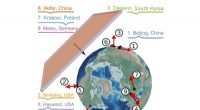
* Remote Collaboration: IT facilitates collaboration among physicists worldwide, allowing them to share data, results, and ideas through online platforms and video conferencing.
* Open Access Publishing: IT enables the dissemination of research findings through online journals and databases, making knowledge accessible to a broader audience.
* Online Communities: IT fosters online communities where physicists can discuss research, share resources, and collaborate on projects.
4. Instrumentation and Control:
* Automated Systems: IT controls complex experimental setups, including lasers, detectors, and other instruments, improving efficiency and reducing human error.
* Remote Control: IT allows physicists to control experiments remotely, enabling research in hazardous or inaccessible environments.
* Precision Measurement: IT enables highly precise measurements, pushing the boundaries of scientific accuracy and understanding.
Examples:
* The Large Hadron Collider (LHC): This particle accelerator relies heavily on IT for data acquisition, processing, and analysis, contributing to major discoveries in particle physics.
* The Hubble Space Telescope: IT is critical for controlling the telescope, transmitting data back to Earth, and processing images for scientific analysis.
* Climate Modeling: IT enables the development and execution of complex climate models, providing valuable insights into global warming and its effects.
Overall, IT has revolutionized modern physics, enabling breakthroughs that were unthinkable just a few decades ago. It continues to be an essential tool for research, discovery, and the advancement of our understanding of the universe.