Similarities:
* Indeterminacy: Both systems exhibit a degree of uncertainty in their precise location at any given time.
* For an electron cloud, the Heisenberg uncertainty principle states that we cannot simultaneously know both the electron's position and momentum with perfect accuracy.
* For a propeller, the blades are moving so fast that their exact position at any instant is difficult to pinpoint with the naked eye.
* Circular Motion: Both involve a kind of circular motion.
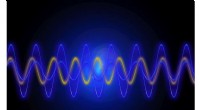
* Electrons in an atom are constantly moving in a cloud-like region around the nucleus, not in a fixed orbit. This motion has a component of circularity.
* An airplane propeller rotates on its axis, creating a circular motion of the blades.
Differences:
* Scale and Nature of Motion: The scale and nature of the motion are vastly different.
* Electron clouds describe the probability of finding an electron in a certain region of space, not the actual path of the electron. This probability distribution is governed by quantum mechanics.
* An airplane propeller is a macroscopic object with a well-defined path of motion. Its rotation can be described by classical physics.
* Energy Levels: Electrons in an atom can only occupy specific energy levels, which are quantized. This quantization leads to the characteristic electron cloud shapes.
* An airplane propeller does not have quantized energy levels.
* Force: The force that governs the motion is different.
* Electrons are held within the atom by the electrostatic force between the negatively charged electron and the positively charged nucleus.
* An airplane propeller is driven by a motor and its motion is governed by classical mechanics.
Conclusion:
While the analogy of an electron cloud to a spinning airplane propeller captures some aspects of their dynamic nature, it is a flawed comparison. The fundamental physics governing their behavior is vastly different, and the analogy should not be taken too literally. It's important to remember that the electron cloud is a quantum mechanical concept, while the propeller is a classical object.