What is Gravity?
* Attraction: Gravity is a force of attraction between any two objects with mass. The more massive an object, the stronger its gravitational pull.
* Distance: Gravity also depends on the distance between objects. The closer two objects are, the stronger their gravitational pull.
How it Works:
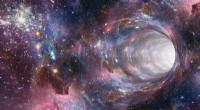
1. Mass and Spacetime: Einstein's theory of general relativity explains that mass warps the fabric of spacetime, like a bowling ball on a trampoline.
2. Curvature: The more massive an object, the more it bends spacetime around it.
3. Motion: Objects moving through this curved spacetime follow the shortest path, which appears as a curved trajectory. This is what we perceive as gravity.
Example:
Imagine a bowling ball placed on a trampoline. The ball creates a dip in the trampoline, representing the warping of spacetime. If you roll a marble across the trampoline, it will be drawn towards the bowling ball because of the dip.
Key Points:
* Universal: Gravity affects everything with mass, from tiny atoms to massive galaxies.
* Weakest Force: Despite its impact, gravity is actually the weakest of the four fundamental forces (the others being electromagnetic, strong nuclear, and weak nuclear).
What We Don't Know:
* Quantum Gravity: Physicists are still working to reconcile gravity with the other fundamental forces at the quantum level.
In simpler terms:
Think of gravity as a giant invisible net that pulls everything towards each other. The more massive an object, the stronger its pull on the net, and the more it draws other objects towards it.