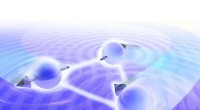
* Atoms and Energy Levels: Atoms have electrons that exist in specific energy levels. When an electron absorbs energy (like light), it jumps to a higher energy level. This is called excitation.
* Spontaneous Emission: An excited electron can spontaneously drop back to a lower energy level, releasing the absorbed energy as a photon (light). This is spontaneous emission.
* Stimulated Emission: The key to a laser is stimulated emission. If an excited atom is struck by a photon with the exact energy difference between its current and lower energy level, it will be stimulated to emit another photon. This new photon has the same properties (frequency, phase, direction) as the stimulating photon.
* Laser Action: In a laser, a medium (like a gas, liquid, or solid) is pumped with energy to excite many atoms. This creates a population inversion, where more atoms are in an excited state than in the ground state. Then, a stimulating photon triggers a cascade of stimulated emissions, resulting in a beam of coherent light:
* Coherent: All photons in the laser beam have the same frequency and phase, giving the beam its special properties.
* Directional: The light is focused and amplified in a narrow beam.
* Monochromatic: All photons have the same color (wavelength).
Key Components of a Laser:
* Gain Medium: The material that provides the energy for the stimulated emission.
* Pump Source: Provides energy to excite the gain medium.
* Optical Cavity: Mirrors that reflect the photons back and forth through the gain medium, amplifying the stimulated emissions.
In summary, a laser is a device that uses stimulated emission to produce a beam of coherent, monochromatic, and directional light.