1. Position:
* Scalar: This is the simplest way to describe location. It uses a single number, usually distance from a reference point (origin), to indicate how far the object is from the reference point. For example, "The car is 10 meters from the stop sign."
* Vector: This method uses both magnitude (distance) and direction. It is represented as an arrow pointing from the origin to the object's location. For example, "The car is 10 meters north of the stop sign."
2. Coordinates:
* Cartesian coordinates: This system uses three perpendicular axes (x, y, z) to define a point in 3D space. The object's location is defined by three numbers that represent its position along each axis.
* Polar coordinates: Used for describing locations in a plane. This system uses a distance (radius) from the origin and an angle (theta) with respect to a reference direction.
* Spherical coordinates: Similar to polar coordinates, but for 3D space. It uses radius, two angles (theta and phi), which define the object's position in 3D.
3. Reference Frames:
* Inertial reference frame: A reference frame where an object at rest remains at rest and an object in motion continues in motion at a constant velocity.
* Non-inertial reference frame: A reference frame that is accelerating. For example, a car turning a corner.
4. Relative Position:
* This method describes the object's position relative to another object. For example, "The ball is 2 meters in front of the player."
5. Trajectory:
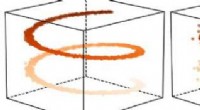
* This refers to the path an object takes through space. The trajectory can be described using various mathematical equations or by plotting the object's position over time.
6. Quantum Mechanics:
* In quantum mechanics, the location of a particle is not a fixed point but rather a probability distribution, represented by a wave function.
The best method to describe an object's location depends on the specific situation and the level of precision needed. For simple descriptions, scalar position or relative position might suffice. More complex situations might require coordinate systems, reference frames, or even quantum mechanics.