Here's a breakdown:
1. Spin as a Fundamental Property:
- In quantum mechanics, particles possess properties that can be quantized, meaning they can only exist in discrete values. Spin is one such property.
- It's like an intrinsic angular momentum possessed by the electron, similar to the angular momentum of a rotating object.
2. Not a Physical Rotation:
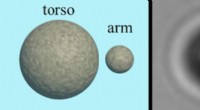
- Unlike a spinning top, the electron's spin isn't a physical rotation. It's not even a rotation in the sense of a wave function rotating.
- The spin of an electron is a fundamental property that cannot be explained by classical physics.
3. Spin and Magnetism:
- The spin of an electron is responsible for its magnetic moment. The spinning electron creates a magnetic field similar to a tiny bar magnet.
- This is why materials with unpaired electrons can be magnetic.
4. Spin Up and Spin Down:
- An electron can have two possible spin states: spin up or spin down. This is represented by a spin quantum number (ms) which can be either +1/2 or -1/2.
- The spin up and spin down states are just labels for the two possible spin orientations.
5. Why is Spin Important?
- Spin plays a crucial role in many areas of physics, including:
- Chemistry: Spin affects the bonding of atoms.
- Materials science: Spin determines the magnetic properties of materials.
- Electronics: Spintronics is a field that uses the spin of electrons for electronics.
In summary, electron spin is a fundamental quantum property that governs its magnetic behavior and plays a crucial role in various scientific fields. It's not a physical rotation but a quantized property that can exist in two states.