1. Maxwell's Equations:
* In the 19th century, James Clerk Maxwell formulated a set of equations that unified electricity and magnetism. These equations predicted the existence of electromagnetic waves and also provided a way to calculate their speed.
* Maxwell's equations relate the speed of light (c) to the permittivity (ε₀) and permeability (μ₀) of free space:
* c = 1 / √(ε₀μ₀)
2. Experimental Verification:
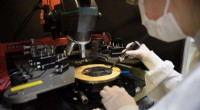
* Direct measurement: The speed of light has been measured directly using various techniques, including:
* Rotating mirror experiments: These experiments use mirrors that rotate at high speeds to measure the time it takes for light to travel a known distance.
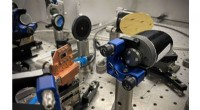
* Interferometry: This technique uses the interference patterns of light waves to measure the speed of light with high precision.
* Indirect measurements: The speed of light can also be inferred indirectly by observing the behavior of light in different situations:
* Measuring the frequency and wavelength of light: The speed of light is the product of its frequency and wavelength (c = fλ). By accurately measuring these values, the speed of light can be determined.
* Observing the deflection of light by massive objects: The bending of light around massive objects, as predicted by general relativity, is dependent on the speed of light.
3. The Value of 'c':
* Through these various experimental and theoretical methods, the speed of light in a vacuum has been determined to be approximately 299,792,458 meters per second (m/s).
* This value is so fundamental that it is now used to define the length of a meter, making it an exact value.
In summary, our knowledge of the speed of light in a vacuum comes from a combination of theoretical predictions based on Maxwell's equations and a wealth of experimental measurements that have confirmed these predictions.