Direct Observation:
* Visual: Simply watching an object move with your eyes. This is the most basic way to observe motion.
* Auditory: Hearing sounds produced by moving objects, like a car driving by or a bird flapping its wings.
* Tactile: Feeling the movement of an object, such as when you touch a spinning wheel.
Indirect Observation:
* Tracking Devices: Using tools like cameras, radar, GPS, or motion sensors to record and analyze an object's movement.
* Measuring Instruments: Using devices like rulers, stopwatches, or accelerometers to measure the distance, time, or speed of an object's motion.
* Indicators: Observing changes in an object's position, shape, or orientation over time. For example, a swaying tree or a melting ice cube.
Other Methods:
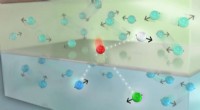
* Particle Tracking: Observing the movement of microscopic particles, like molecules in a fluid, using specialized microscopes.
* Scientific Experiments: Setting up controlled experiments to observe and measure motion under specific conditions.
It's important to remember that:
* Motion is relative: An object can be considered in motion or at rest depending on the frame of reference. A person sitting on a train is at rest relative to the train but in motion relative to the ground.
* Motion can be described: We can describe motion using various parameters like displacement, velocity, acceleration, etc. These parameters provide a more quantitative understanding of motion.
So, depending on the specific situation and the level of detail required, different methods can be used to observe motion effectively.