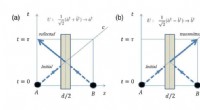
This diagram illustrates the relationship between force, distance, and the angle between them in calculating work.
Components:
* F: Force vector
* d: Displacement vector
* θ: Angle between force and displacement vectors
* F_parallel: Component of force parallel to displacement (F * cos(θ))
Diagram:
```
^
|
| F
| /
| /
|/ θ
|-----------------> d
|
|
v
```
Explanation:
* Work: Work is done when a force causes an object to move a certain distance. It is a scalar quantity (has magnitude only).
* Force (F): The force applied on the object.
* Distance (d): The displacement of the object.
* Angle (θ): The angle between the direction of the force and the direction of the displacement.
Important Points:
* Only the component of force parallel to the displacement contributes to work.
* The component of force perpendicular to the displacement does not contribute to work.
* When the force and displacement are in the same direction (θ = 0°), cos(θ) = 1, and the work done is simply Force x Distance.
* When the force and displacement are perpendicular (θ = 90°), cos(θ) = 0, and no work is done.
Mathematical Equation:
* Work (W) = F * d * cos(θ)
Example:
Imagine pushing a box across a floor. You apply a force at an angle to the floor. The component of the force parallel to the floor is what moves the box, and the component of the force perpendicular to the floor does not contribute to the movement. The work done in this case is the force parallel to the floor multiplied by the distance the box moves.
Note: This diagram shows a simplified representation for conceptual understanding. In more complex scenarios, you might need to consider vector addition and other factors.