Here's why:
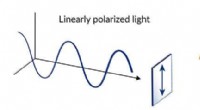
* Amplitude is the maximum displacement of a point on the wave from its equilibrium position. It's essentially the "height" of the wave from its resting point to its peak.
* Height of a wave can be misleading. It usually refers to the vertical distance between the peak and trough of the wave.
Think of it this way:
Imagine a rope tied to a post. You shake the rope up and down.
* Amplitude is how far up and down you move the rope (from the resting position).
* Height is the total distance between the highest point and the lowest point of the rope.
The amplitude of the wave will depend on how hard you shake the rope (the energy you put into it), not on the height of the wave itself.
Example:
Two waves can have the same height but different amplitudes:
* Wave A: Peak at 10 cm, trough at 0 cm, amplitude = 10 cm
* Wave B: Peak at 5 cm, trough at -5 cm, amplitude = 5 cm
Both waves have a height of 10 cm, but wave A has a larger amplitude.
Key takeaway: Amplitude is a measure of the maximum displacement of a point on the wave from its equilibrium position, while height is the total vertical distance between the peak and trough. They are not the same thing.