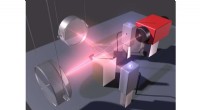
1. Reflection: Light bounces off the surface of an object. This is how we see most objects, as light reflects off them and into our eyes. The angle of incidence (the angle at which the light hits the surface) is equal to the angle of reflection.
2. Absorption: The object absorbs the light energy, converting it into another form of energy, often heat. This is why dark colors absorb more light and feel warmer than light colors.
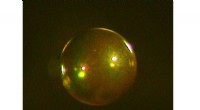
3. Transmission: Light passes through the object. This is what happens when light travels through glass or water. Transparent objects allow most light to pass through, while translucent objects allow some light to pass through but scatter it, making the object appear blurry.
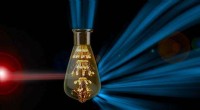
4. Refraction: The light bends as it passes from one medium to another (like from air to water). This is why a straw in a glass of water appears bent. The amount of bending depends on the angle of incidence and the refractive index of the two mediums.
These are the most common ways light interacts with matter, but there are other more complex interactions, such as scattering and diffraction.