1. Vibration: The particles in a solid are tightly packed together and held in place by strong forces of attraction. They don't move around freely like liquids or gases. Instead, they vibrate in a fixed position.
2. Limited Movement: While the particles can vibrate, they don't have enough energy to overcome the strong attractive forces and break free from their fixed positions. This means they cannot move from one place to another within the solid.
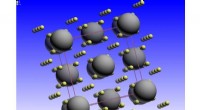
3. Crystalline Structure: Many solids have a regular, repeating arrangement of particles called a crystalline structure. This structure contributes to their rigidity and defines their shape.
4. Diffusion: While solids don't move freely, a slow process called diffusion can occur. Atoms or molecules can slowly move from one part of the solid to another, but this is a very slow process compared to liquids and gases.
Here's an analogy to help understand:
Imagine a packed dance floor where everyone is tightly squeezed together. People can still wiggle and move their arms and legs (vibration), but they can't move around freely (limited movement). The overall structure of the dance floor remains the same (crystalline structure). Occasionally, someone might push their way through the crowd to another spot (diffusion), but it's a slow and difficult process.
Key Takeaways:
* Solids have tightly packed particles that vibrate in fixed positions.
* They don't move around freely like liquids or gases.
* They have a fixed shape due to their strong forces of attraction and crystalline structure.
* Diffusion is a slow process that can occur in solids.