For Observation and Measurement:
* Particle accelerators: Like the Large Hadron Collider, these powerful machines accelerate particles to incredible speeds, allowing physicists to study their fundamental properties and create new particles.
* Detectors: These are specialized instruments that measure the properties of particles, radiation, or other phenomena. Examples include:
* Scintillation detectors: Measure the light produced by ionizing radiation.
* Cloud chambers: Visualize the paths of charged particles.
* Geiger counters: Detect ionizing radiation.
* Telescopes: Observe light from distant objects in space.
* Spectrometers: Analyze the wavelengths of light to determine the composition of materials.
* Microscopes:
* Electron microscopes: Provide extremely high magnification for studying the structure of materials at the atomic level.
* Scanning tunneling microscopes (STMs): Image the surface of materials at the atomic scale.
* Lasers: Precisely controlled sources of light used for many applications, including:
* Laser spectroscopy: Studying the energy levels of atoms and molecules.
* Laser cooling: Slowing down and trapping atoms.
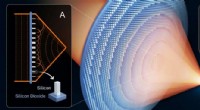
* Laser interferometry: Measuring distances with incredible accuracy.
* Sensors: Devices that measure physical quantities like temperature, pressure, magnetic fields, and more.
For Data Analysis and Simulation:
* Computers: Used for everything from data analysis and visualization to complex simulations and theoretical calculations.
* Software:
* Statistical analysis packages: Analyze experimental data.
* Numerical modeling software: Simulate physical systems using computers.
* Data visualization tools: Create graphs and charts to represent data.
* Supercomputers: Extremely powerful computers used for simulating complex systems like weather patterns or the evolution of the universe.
For Building and Controlling Experiments:
* Vacuum systems: Used to create environments free of air, important for many experiments in atomic and particle physics.
* Cryogenics: The technology for reaching extremely low temperatures, used to study materials at their quantum properties.
* High-voltage power supplies: Used to generate the high voltages needed for particle accelerators and other experiments.
* Control systems: Used to automate and monitor experiments.
For Applying Physics:
* Medical imaging: Technologies like MRI, PET, and X-rays use physics principles to diagnose and treat medical conditions.
* Electronics: The design of transistors, integrated circuits, and other electronic devices rely heavily on physics principles.
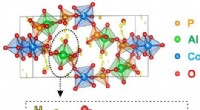
* Materials science: Physics is crucial for understanding and developing new materials with desired properties.
* Energy production: Physics is used to design and improve power plants, batteries, and other energy technologies.
* Space exploration: Physics is essential for designing spacecraft, understanding the environment in space, and navigating through it.
This list is not exhaustive, but it highlights the wide range of technologies that physicists use to explore the universe and solve problems in our everyday lives.