1. Water Displacement Method (Archimedes' Principle)
* Materials: A graduated cylinder or beaker, water, the irregular object.
* Procedure:
1. Fill the graduated cylinder or beaker with a known volume of water. Record the initial water level.
2. Carefully place the object into the cylinder or beaker, ensuring it is fully submerged.
3. Observe the new water level and record it.
4. The difference between the initial and final water levels represents the volume of the object.
2. Sand Displacement Method
* Materials: A container with a known volume, fine sand, the irregular object.
* Procedure:
1. Fill the container completely with sand.
2. Carefully place the object into the container, ensuring it is fully submerged in the sand.
3. Remove the object and measure the volume of the sand that was displaced. This is the volume of the object.
3. Geometric Approximation
* Materials: Ruler, calipers, or measuring tape, knowledge of basic geometry formulas.
* Procedure:
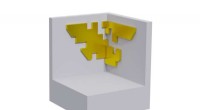
1. Break down the irregular object into simpler geometric shapes (cubes, spheres, cones, cylinders, etc.).
2. Measure the dimensions of each of these shapes.
3. Calculate the volume of each shape using the appropriate formula.
4. Add the volumes of all the shapes together to approximate the total volume of the irregular object.
4. Computerized 3D Scanning
* Materials: 3D scanner.
* Procedure:
1. Use a 3D scanner to create a digital model of the irregular object.
2. The software associated with the scanner can automatically calculate the volume of the object.
Important Considerations:
* Accuracy: The accuracy of each method depends on the precision of the measurements and the complexity of the object's shape.
* Density: If the object is porous or has internal cavities, the water displacement method may not be accurate.
* Size: Some methods, like water displacement, may not be practical for very large objects.
Choose the method that best suits the size, material, and accuracy requirements of your object.