Understanding the Physics
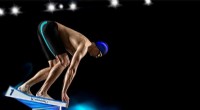
* Free Fall: The swimmer is in free fall, meaning the only force acting on them is gravity.
* Acceleration Due to Gravity: The acceleration due to gravity (g) is approximately 9.8 m/s². This means the swimmer's speed increases by 9.8 meters per second every second they fall.
* Ignoring Air Resistance: For simplicity, we'll ignore air resistance in this calculation.
The Formula
We can use the following kinematic equation to find the final velocity (v) of the swimmer:
v² = u² + 2as
Where:
* v = final velocity (what we want to find)
* u = initial velocity (0 m/s since the swimmer jumps off the tower)
* a = acceleration due to gravity (9.8 m/s²)
* s = distance of the fall (10 m)
Calculations
1. Plug in the values:
v² = 0² + 2 (9.8 m/s²) (10 m)
2. Simplify:
v² = 196 m²/s²
3. Find the square root:
v = √196 m²/s² = 14 m/s
Answer
The swimmer will hit the water with a velocity of approximately 14 m/s.