1. Force:
* Newton's Second Law: The fundamental principle here is F = ma (Force equals mass times acceleration). To accelerate an object, you need to apply a force to it.
* Examples:
* Rocket Propulsion: Rockets work by expelling hot gases in one direction, creating a force that propels the rocket in the opposite direction. They work in space, which is a vacuum.
* Electromagnetic Fields: Charged objects can be accelerated by electric and magnetic fields. This is how particle accelerators work.
2. Gravity:
* Newton's Law of Universal Gravitation: Objects with mass attract each other.
* Example:
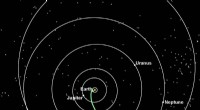
* Planetary Motion: Planets are constantly accelerating due to the gravitational pull of the Sun.
3. Momentum Transfer:
* Collision: If one object collides with another object in a vacuum, momentum can be transferred, resulting in acceleration.
* Example:
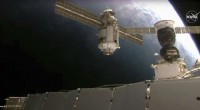
* Spacecraft Docking: When two spacecraft dock, they exchange momentum, causing a change in their velocities.
Important Considerations:
* Friction: In a vacuum, there is no air resistance, so friction is minimal. This means that once an object is accelerated, it will continue to move at a constant velocity unless acted upon by another force.
* Mass: The mass of an object influences its acceleration. Heavier objects require more force to achieve the same acceleration as lighter objects.
Here's a simple analogy:
Imagine a ball rolling across a table. If you push the ball (apply a force), it will accelerate. Now imagine the ball rolling in space (a vacuum). If you push it, it will accelerate and continue moving in that direction forever, since there is no friction to slow it down.
Let me know if you have any other questions!