"An object at rest will remain at rest, and an object in motion will remain in motion with the same speed and in the same direction unless acted upon by an unbalanced force."
Here's what this means for a particle without force:
* If the particle is at rest, it will stay at rest. This means its velocity is zero, and it will continue to have zero velocity unless a force acts on it.
* If the particle is in motion, it will continue moving at a constant velocity. This means its speed and direction will not change unless a force acts on it.
Examples:
* A ball at rest on a table will stay at rest unless someone pushes or pulls it.
* A car moving at a constant speed on a straight road will continue moving at that speed and direction unless the driver applies the brakes, accelerates, or turns the steering wheel.
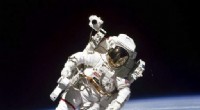
* A satellite orbiting Earth in a vacuum will continue orbiting at a constant speed and path because there is no significant force acting on it (ignoring slight gravitational pull from the Sun and other planets).
Important Considerations:
* Friction: In real-world scenarios, even if there is no direct force applied, friction can act as a force opposing motion. This means a particle in motion will eventually slow down and come to rest.
* Gravity: While the particle may not have a direct force acting on it, gravity is a force that is always present. For example, a ball thrown in the air will eventually come back down due to gravity.
* Relativity: In Einstein's theory of relativity, even in the absence of forces, particles can be influenced by the curvature of spacetime caused by massive objects like stars and black holes.
In summary, a particle without force will either remain at rest or continue moving at a constant velocity. However, in the real world, other factors like friction and gravity can influence its motion.