Why frequency usually stays constant:
* The fundamental nature of light: Light is an electromagnetic wave, and its frequency is determined by the source of the light. This frequency represents the energy of the wave, which is a fundamental property of the light itself.
* Conservation of energy: When light enters a different medium, its speed and wavelength change, but its energy (and thus frequency) must remain constant. Imagine light as a series of waves hitting a beach. The waves slow down as they approach the shore, but the number of waves hitting the shore per second (frequency) remains the same.
When frequency can change:
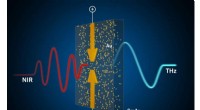
* Nonlinear optics: In some materials, the interaction of light with the material can be nonlinear. This means the response of the material to the light is not proportional to the light intensity. This can lead to phenomena like harmonic generation, where light of a specific frequency is converted into light of a different (often higher) frequency.
* Extremely high light intensities: At incredibly high light intensities, like those produced by lasers, the interaction of light with the medium can also be nonlinear, potentially leading to frequency changes.
In summary:
* For most everyday refraction scenarios, frequency remains constant. This is due to the fundamental nature of light and the conservation of energy principle.
* In specialized scenarios involving nonlinear optics and extremely high intensities, frequency can change.
It's important to note that the vast majority of refraction phenomena occur under conditions where frequency remains constant, making it a safe assumption in most cases.