1. Reflection: This is the most obvious effect. The sound waves bounce off the surface, changing direction. This is why you hear an echo when you shout in a large empty room.
* Angle of incidence = Angle of reflection: The angle at which the sound wave hits the surface (angle of incidence) is equal to the angle at which it bounces off (angle of reflection).
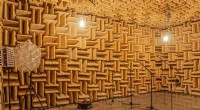
2. Absorption: Some of the sound energy is absorbed by the wall, converting it into heat.
* Material properties: The amount of absorption depends on the material of the wall. Soft materials like carpets and curtains absorb more sound than hard surfaces like concrete.
3. Transmission: A small amount of sound energy may pass through the wall.
* Wall thickness and material: This is more likely to happen with thinner walls or walls made of less dense materials.
4. Diffraction: Sound waves can bend around corners and obstacles. This effect is more pronounced at lower frequencies.
5. Interference: Reflected sound waves can interfere with the original sound waves, leading to changes in the overall sound intensity.
Overall, the specific outcome depends on several factors:
* Material of the wall: Harder materials reflect more sound, while softer materials absorb more.
* Angle of incidence: The angle at which the sound waves strike the surface.
* Frequency of the sound: Higher frequencies tend to reflect more.
* Thickness of the wall: Thicker walls absorb more sound.
Understanding these interactions is crucial in fields like acoustics, soundproofing, and architectural design.