What are discrete particles?
* Atoms: The smallest unit of an element that retains the chemical properties of that element. They are composed of even smaller particles.
* Subatomic particles: These are the components of atoms, including:
* Protons: Positively charged particles found in the nucleus of an atom.
* Neutrons: Neutrally charged particles also found in the nucleus.
* Electrons: Negatively charged particles that orbit the nucleus.
* Quarks: The fundamental particles that make up protons and neutrons.
* Leptons: Another class of fundamental particles, including electrons.
Evidence for the particle nature of matter:
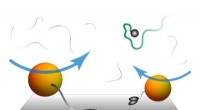
* Brownian Motion: The random movement of particles suspended in a fluid, which can be explained by collisions with invisible particles.
* The Photoelectric Effect: Light striking a metal surface can cause electrons to be emitted. This effect is explained by the particle nature of light (photons).
* Quantum Mechanics: This theory describes the behavior of matter at the atomic and subatomic level and is based on the concept of quantized energy levels and discrete particles.
Important Note: While matter is composed of discrete particles, these particles can behave like waves in certain situations, as described by wave-particle duality.
In summary: Matter is made up of discrete particles, and this concept is supported by a wealth of scientific evidence.