"For every action, there is an equal and opposite reaction."
Here's how it works:
* Action Force: When one object exerts a force on another object (the action), this is called the action force.
* Reaction Force: The second object simultaneously exerts an equal and opposite force back on the first object. This is called the reaction force.
Important Points:
* Equal in Magnitude: The action and reaction forces have the same strength (magnitude).
* Opposite in Direction: The action and reaction forces act in opposite directions.
* Act on Different Objects: Crucially, the action force acts on the second object, while the reaction force acts on the first object.
Examples:
* Walking: When you push your foot against the ground (action force), the ground pushes back on your foot with an equal and opposite force (reaction force), propelling you forward.
* Jumping: When you jump, you push down on the ground (action force). The ground pushes back on you with an equal and opposite force (reaction force), launching you upward.
* Rocket Propulsion: A rocket expels hot gas out of its nozzle (action force). The gas pushes back on the rocket with an equal and opposite force (reaction force), propelling the rocket forward.
Why is this important?
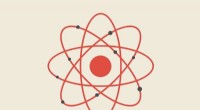
Understanding forces acting in pairs helps us to explain a wide range of physical phenomena, from the movement of objects to the interaction of particles at the atomic level.