Key Characteristics of Forces:
* Magnitude: This refers to the strength of the force, typically measured in Newtons (N). A larger magnitude means a stronger force.
* Direction: Forces have a specific direction in which they act. We often describe this using compass directions (north, south, east, west) or relative to an object's position (up, down, left, right).
* Point of Application: Forces act on specific points on an object. This is important for understanding how forces cause rotation or torque.
* Type: Forces can be categorized based on their origin. Some common types include:
* Contact Forces: Require physical contact between objects, like pushing a door or friction.
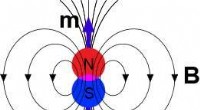
* Field Forces: Act over distances, like gravity or magnetism.
Important Note: Forces are vectors, meaning they have both magnitude and direction. This is crucial for understanding how forces combine and affect motion.
Beyond the Basics:
While the characteristics listed above are fundamental, there are other aspects of forces that are important depending on the context:
* Equilibrium: When forces are balanced, they result in no net change in motion.
* Work: Forces can do work, transferring energy to an object and causing it to move.
* Impulse: A force acting over a short time interval can cause a change in momentum.
Let me know if you'd like a deeper dive into any of these concepts!