Here's why:
* Mechanical waves need a medium (like solid, liquid, or gas) to travel. They are caused by vibrations within the medium, and these vibrations transfer energy.
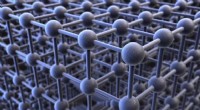
* Solids have molecules packed much more closely together than gases. This means:
* The molecules in a solid can transfer energy (from the vibrations) to their neighbors much more quickly.
* Solids are more rigid, allowing the vibrations to travel with less distortion.
Examples of mechanical waves:
* Sound waves: These are longitudinal waves where the vibrations travel in the same direction as the wave itself.
* Seismic waves: These are waves generated by earthquakes and travel through the Earth.
* Water waves: These are a combination of transverse and longitudinal waves, where the particles move both up and down and back and forth.
Electromagnetic waves (like light and radio waves) do not require a medium to travel. They can travel through a vacuum. These waves travel at the speed of light in a vacuum, which is the same regardless of the medium.