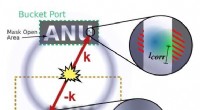
* Inelastic Collision: An inelastic collision is one where kinetic energy is *not* conserved. Some of the kinetic energy is lost, often converted to heat, sound, or deformation of the objects.
* Glancing Collision: A glancing collision is one where the objects don't collide head-on. They hit at an angle.
What you might be looking for:
* Angle of Collision: This refers to the angle at which the objects collide. It's important in analyzing the motion after the collision.
* Coefficient of Restitution: This value (often denoted by 'e') quantifies the "elasticity" of the collision. A coefficient of 1 indicates a perfectly elastic collision (no energy loss), while a coefficient of 0 indicates a perfectly inelastic collision (maximum energy loss).
To analyze an inelastic glancing collision, you'll need to consider:
1. Conservation of Momentum: Even though energy isn't conserved, momentum (mass times velocity) is always conserved in a closed system.
2. The angle of collision: This determines how the momentum is transferred.
3. The coefficient of restitution: This helps determine how much kinetic energy is lost.
In short, there's no single "degree" associated with an inelastic glancing collision. You need to look at multiple factors to understand the dynamics.