1. Newton's Second Law of Motion:
* F = m * a
* F: Force (measured in Newtons, N)
* m: Mass (measured in kilograms, kg)
* a: Acceleration (measured in meters per second squared, m/s²)
* Application: This is the most common way to calculate force. If you know the mass of an object and its acceleration, you can directly calculate the force acting on it.
2. From Potential Energy:
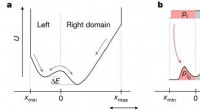
* F = -dU/dx
* F: Force (measured in Newtons, N)
* U: Potential energy (measured in Joules, J)
* x: Position (measured in meters, m)
* Application: This equation is used when the force is related to a potential energy field. For example, the force of gravity can be calculated from the gravitational potential energy.
3. Using Force Sensors:
* Force Sensors: These are devices that measure the force acting on them. They are commonly used in engineering and scientific applications.
* Types: Strain gauge sensors, load cells, piezoelectric sensors, etc.
* Application: Force sensors are used to directly measure force without needing to calculate it from other quantities.
4. From Other Physical Laws:
* Coulomb's Law: Calculates the electrostatic force between charged objects.
* Hooke's Law: Calculates the force exerted by a spring.
* Drag Force: Calculates the force acting on an object moving through a fluid.
* Buoyant Force: Calculates the upward force acting on an object submerged in a fluid.
5. Experimental Measurements:
* Direct Measurement: In some cases, you can directly measure the force using tools like a spring scale or a balance.
* Indirect Measurement: You can deduce the force from other measurements, like the deflection of a beam or the change in momentum of an object.
Important Considerations:
* Direction: Force is a vector quantity, meaning it has both magnitude and direction. Be sure to consider the direction of the force when calculating or measuring it.
* Net Force: The net force is the vector sum of all forces acting on an object.
* Units: Make sure to use consistent units for all quantities involved in the calculation.
By understanding the various ways to find force and applying the appropriate methods, you can effectively analyze and quantify force in different scientific scenarios.