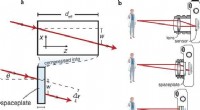
1. Refraction: When a laser beam passes from one medium to another (like air to water, or air to a different density of air), it bends. This is called refraction.
2. Atmospheric Turbulence: Air isn't perfectly still, and variations in temperature and pressure can create "pockets" of different densities. These pockets act like tiny lenses, causing the laser beam to bend slightly and creating the "twinkling" effect.
3. Diffraction: The wave nature of light causes it to spread out slightly as it travels. This effect is more noticeable over longer distances and can make the beam appear to "wander" slightly.
4. Scattering: Dust particles and other tiny particles in the air can scatter the laser beam, causing some of the light to be redirected in different directions.
5. Reflection: If the laser beam encounters a reflective surface, like a mirror or a cloud, it will be reflected at an angle equal to the angle of incidence.
In summary: A laser beam doesn't "change direction" in mid-air in the same way that a thrown ball does. However, the real world isn't a vacuum, and various environmental factors can cause the beam to appear to bend, scatter, or be reflected.