Waves are ubiquitous in the universe, from the ripples in a pond to light traveling across vast distances. These disturbances carry energy and information without transporting matter, exhibiting fascinating behaviors known as wave phenomena. Here are some key ones:
1. Reflection: When a wave encounters a boundary, it can bounce back. Think of a ball thrown against a wall, or sound waves echoing off a cliff.
2. Refraction: This is the bending of waves as they pass from one medium to another. For example, light bends when passing from air to water, causing a straw to appear broken in a glass.
3. Diffraction: Waves spread out as they pass through an opening or around an obstacle. This explains why we can hear sounds from around corners, or why light can bend around a sharp edge.
4. Interference: When two or more waves meet, they interact with each other. This can lead to constructive interference (where waves reinforce each other, creating a larger wave), or destructive interference (where waves cancel each other out). This principle is crucial in understanding phenomena like light and sound.
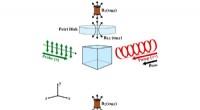
5. Polarization: This describes the direction of the wave's oscillation. For example, light waves can be polarized vertically or horizontally, which is why polarized sunglasses reduce glare.
6. Doppler Effect: This refers to the change in frequency of a wave due to the relative motion between the source and the observer. The familiar siren sound changing pitch as an ambulance passes is a classic example.
7. Superposition: This is the principle that when multiple waves meet at a point, the resulting displacement is the sum of the individual wave displacements. This forms the basis of many complex wave interactions.
8. Standing Waves: When waves interfere with their own reflections, they can create stationary patterns called standing waves. These occur in musical instruments and other vibrating systems.
Examples of Wave Phenomena in Action:
* Sound: Sound waves are mechanical waves that travel through a medium (like air) and exhibit phenomena like reflection (echoes), refraction (bending of sound around corners), diffraction (hearing sound from around corners), and interference (creating beats when two sound waves interfere).
* Light: Light waves are electromagnetic waves that can exhibit reflection (mirrors), refraction (lenses), diffraction (holograms), interference (iridescent colors in soap bubbles), polarization (polarized sunglasses), and the Doppler effect (redshift of distant galaxies).
* Water Waves: Water waves are mechanical waves that show reflection (waves bouncing off a seawall), refraction (waves bending as they enter shallower water), diffraction (waves spreading out as they pass through a narrow opening), interference (creating interference patterns in a ripple tank), and superposition (multiple waves interacting).
Understanding these wave phenomena is crucial in many fields, from physics and engineering to medicine and communication. They explain everything from the operation of musical instruments to the design of antennas and the formation of galaxies.