Here's why:
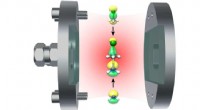
* Collisions create force: When particles collide, they exert a force on each other. This force is perpendicular to the surface of the collision.
* Pressure is force per area: Pressure is defined as the force exerted per unit area. So, when many particles are colliding with a surface, they create a net force over that area, resulting in pressure.
Examples:
* Gas pressure: Gas molecules are constantly moving and colliding with each other and the walls of their container. These collisions create pressure within the container.
* Fluid pressure: Liquids and gases are both fluids, and the same principle applies. The collisions of fluid particles create pressure that acts in all directions.
Factors affecting pressure:
* Number of particles: More particles mean more collisions, leading to higher pressure.
* Speed of particles: Faster particles create stronger collisions, resulting in higher pressure.
* Area of contact: Pressure is inversely proportional to the area of contact. A smaller area will experience higher pressure for the same force.
Importance of pressure:
Pressure is a fundamental concept in physics and engineering. It plays a crucial role in:
* Meteorology: Atmospheric pressure drives weather patterns.
* Hydrostatics: Pressure in liquids is the basis for hydraulic systems.
* Thermodynamics: Pressure is a key variable in understanding the behavior of gases and liquids.
* Engineering: Pressure is used in designing everything from bridges to airplanes.