It is impossible to devise a cyclically operating device that, without any other effect, absorbs energy from a single thermal reservoir and delivers an equivalent amount of work.
This statement essentially means that you cannot create a perpetual motion machine of the second kind, which would operate by continuously converting heat from a single source into work without any other changes.
Here's a breakdown of the statement:
* Cyclically operating device: The device operates in a cycle, returning to its initial state after each operation.
* Single thermal reservoir: The device only interacts with a single source of heat.
* Absorbs energy: The device takes heat from the reservoir.
* Delivers an equivalent amount of work: The device produces an amount of work equal to the heat absorbed.
Consequences of the Kelvin-Planck Statement:
* Heat cannot be completely converted into work: There will always be some waste heat generated.
* Heat flows from hot to cold: For heat to flow from a colder to a hotter reservoir, additional work must be done.
* Efficiency limitations: The Kelvin-Planck statement sets a limit on the efficiency of heat engines, defining the Carnot efficiency as the maximum possible efficiency.
Illustrative Example:
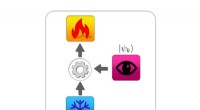
Imagine a device that continuously extracts heat from the ocean and converts it into electricity to power a house. This device would violate the Kelvin-Planck statement because it would be converting heat from a single source into work without any other effect.
The Kelvin-Planck statement is a fundamental principle in thermodynamics that explains the direction of energy flow and sets limits on the conversion of heat into work.