Radial Acceleration:
* Definition: Radial acceleration is directed towards the center of the circular path of the projectile. It's responsible for the change in direction of the projectile's velocity.
* Projectile Motion: While projectile motion is typically described as parabolic, if the projectile is launched at an angle, it will follow a curved path that can be approximated as a section of a circular arc. This curvature means there will be a radial acceleration acting on the projectile.
Tangential Acceleration:
* Definition: Tangential acceleration is directed along the tangent line of the circular path of the projectile. It's responsible for the change in the magnitude of the projectile's velocity.
* Projectile Motion: A projectile will usually have a tangential acceleration due to gravity.
* If the projectile is launched upwards, gravity acts opposite to the tangential velocity, slowing it down.
* If the projectile is launched downwards, gravity acts in the direction of the tangential velocity, speeding it up.
Important Considerations:
* Circular Motion: Radial and tangential acceleration are most commonly associated with objects moving in circular paths. While a projectile's path is not perfectly circular, it can have components of both types of acceleration.
* Air Resistance: The presence of air resistance can significantly influence the projectile's trajectory and its radial and tangential accelerations.
Example:
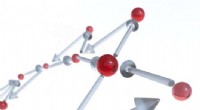
Imagine a projectile fired at an angle. Initially, it has a significant upward tangential velocity component. As it moves along its curved path, gravity causes a downward tangential acceleration, slowing down its upward motion. At the same time, there's a radial acceleration towards the center of curvature of the projectile's path, causing the projectile to change direction.
In summary: While projectiles are typically analyzed in the context of parabolic motion, they can experience both radial and tangential accelerations, especially when considering their curved trajectories and the influence of gravity.