Here's a breakdown:
* Acceleration is the rate of change of velocity. This means acceleration tells us how quickly and in what direction the velocity is changing.
* Instantaneous acceleration refers to the acceleration at a specific moment in time.
* Velocity has both magnitude (speed) and direction.
Therefore, the direction of instantaneous acceleration is determined by:
* If the velocity is increasing: The acceleration is in the same direction as the velocity.
* If the velocity is decreasing: The acceleration is in the opposite direction to the velocity (this is sometimes called deceleration).
* If the velocity is changing direction: The acceleration is in the direction of the change in velocity.
Example:
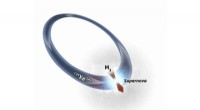
Imagine a car moving in a circle at a constant speed. Even though the speed is constant, the car is constantly changing direction. This means the car has an instantaneous acceleration directed towards the center of the circle (this is called centripetal acceleration).
In summary: The direction of instantaneous acceleration is always aligned with the direction of the change in velocity at that precise moment.