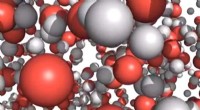
Collision frequency, in the realm of chemistry and physics, refers to the average number of collisions that occur between particles (atoms or molecules) per unit time and per unit volume. It's a crucial concept for understanding reaction rates and the kinetics of chemical reactions.
Factors Affecting Collision Frequency:
* Concentration: Higher concentration means more particles in a given space, increasing the likelihood of collisions.
* Temperature: Higher temperatures mean faster-moving particles, leading to more frequent collisions.
* Size and Shape of Molecules: Larger molecules have a greater surface area for collisions, while irregularly shaped molecules might collide more frequently due to their complex interactions.
* Particle Velocity: Faster particles mean more collisions per unit time.
Importance in Chemistry:
* Reaction Rate: Collision frequency is directly related to the rate of a chemical reaction. More collisions mean a higher chance of successful reactions.
* Kinetic Theory of Gases: Collision frequency plays a fundamental role in understanding gas behavior, including pressure and diffusion.
* Catalyst Action: Catalysts work by increasing collision frequency, thus speeding up reactions.
Calculating Collision Frequency:
While a detailed calculation of collision frequency can be complex, a simplified equation for ideal gases can be used:
Z = (√2 * π * d² * N² * v) / V
Where:
* Z = collision frequency
* d = diameter of the molecule
* N = number of molecules
* v = average velocity of molecules
* V = volume
In simpler terms, collision frequency is like the "busy-ness" of particles in a given space. The busier they are, the more often they bump into each other!
Understanding collision frequency helps us predict and control chemical reactions, ultimately leading to advancements in various fields like materials science, pharmaceuticals, and energy production.