Technology and physics are intricately linked, with one often building upon the other. Here's a breakdown of their relationship:
Physics as the Foundation:
* Understanding the Laws of Nature: Physics provides the fundamental principles that govern the universe. This includes laws of motion, energy, electricity, magnetism, and more. These laws are the building blocks for any technological advancement.
* Developing New Technologies: Physics discoveries lead to the development of new technologies. For instance, the discovery of electricity led to the development of countless technologies, including electric lights, computers, and smartphones.
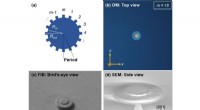
* Improving Existing Technologies: Physics research constantly improves existing technologies. For example, advancements in semiconductor physics have revolutionized the computing industry, leading to smaller, faster, and more efficient devices.
Technology as the Catalyst for Physics Research:
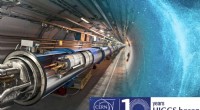
* Enabling New Research Tools: Technology provides tools for physicists to explore the universe, conduct experiments, and analyze data. Advanced telescopes, particle accelerators, and supercomputers are all examples of technology aiding physics research.
* Solving Real-world Problems: Technology creates challenges that require physics to understand and solve. For example, the development of faster airplanes requires advanced aerodynamics, while the creation of efficient solar panels necessitates a deep understanding of photovoltaics.
* Pushing the Boundaries of Physics: Technology often pushes the boundaries of what physicists can study. For example, the development of quantum computers has opened up new avenues for researching quantum phenomena.
Examples of their Interplay:
* Semiconductors: Physics research on semiconductors has led to the development of transistors, integrated circuits, and microchips, which form the basis of modern computers, smartphones, and countless other technologies.
* Laser Technology: The development of lasers, based on principles of quantum physics, has revolutionized fields such as medicine, manufacturing, and communication.
* GPS: Global Positioning System (GPS) relies on Einstein's theory of relativity to accurately calculate position.
* MRI: Magnetic Resonance Imaging (MRI) uses principles of nuclear magnetic resonance, a phenomenon discovered through physics research.
Conclusion:
Technology and physics are intertwined and mutually beneficial. Physics provides the fundamental understanding of the universe, enabling technological advancements. In turn, technology provides the tools and challenges for physicists to further their research. This dynamic relationship will continue to drive progress in both fields, shaping our future.