Here's what we know about electric current in a wire based on later scientific understanding:
* Electrons as the carriers: Electric current is the flow of charged particles. In a typical metal wire, these particles are electrons.
* Drift velocity: Electrons don't move at the speed of light through a wire. They have a relatively slow "drift velocity," meaning they move in a general direction but collide with atoms in the wire, causing them to zig-zag and wander.
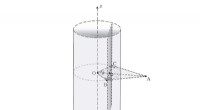
* Electromagnetic field: The moving electrons create a magnetic field around the wire. This field is what Ørsted discovered. The strength of the magnetic field is proportional to the current flowing through the wire.
Therefore, while Ørsted's discovery was foundational, it didn't specifically describe the "action" of the electric current within the wire. We understand that the flow of electrons creates a magnetic field, but the details of how this happens involve complex physics beyond what Ørsted was able to explore.