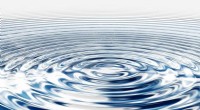
* Change in speed: Waves travel at different speeds in different mediums. For example, light travels faster in air than in water. When a wave enters a denser medium, it slows down.
* Change in direction: The change in speed causes the wave to bend, or refract. The amount of bending depends on the angle at which the wave strikes the boundary between the two mediums and the difference in speed between the two mediums.
* Snell's Law: This law mathematically describes the relationship between the angle of incidence, angle of refraction, and the indices of refraction of the two mediums.
Here's a simple analogy: imagine a car driving from a smooth road onto a muddy field. The car will slow down as it enters the mud and will also change direction, depending on the angle at which it enters the field.
Examples of refraction:
* Light: When you look at a straw in a glass of water, it appears to be bent at the surface of the water. This is because the light from the straw refracts as it passes from the water to the air.
* Sound: Sound waves also refract. This is why sounds may seem louder or clearer when you are close to a wall or other reflecting surface.
Let me know if you'd like to explore any of these concepts in more detail!