1. The Equivalence Principle:
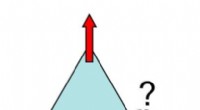
* Einstein's key insight: In a closed box, you cannot tell the difference between being at rest on Earth (experiencing gravity) and accelerating upwards at 9.8 m/s² (the acceleration due to gravity).
* The implications: This means that gravity and acceleration are equivalent in their effects on objects within a local frame of reference.
2. How It Works:
* Gravity is a force: Gravity pulls objects towards each other. On Earth, we experience this as a downward force.
* Acceleration is a change in velocity: If an object's velocity is changing (either in speed or direction), it's accelerating.
* The equivalence: The key is that both gravity and acceleration cause the same effect: objects falling towards the source of the acceleration or gravity.
3. Examples:
* Freefall: In a vacuum, a feather and a hammer fall at the same rate. This is because they both experience the same acceleration due to gravity.
* Spacecraft in orbit: Astronauts in a spacecraft orbiting Earth are in a state of constant freefall. They feel weightless because they are constantly accelerating towards the Earth, but their forward motion keeps them from crashing.
* A rocket launching: As a rocket accelerates upwards, astronauts feel heavier because they are being pushed down by the acceleration. This feeling is indistinguishable from the sensation of gravity.
4. Key Points:
* Gravity and acceleration are not the same thing: Gravity is a force, while acceleration is a change in velocity. However, their effects on objects within a local frame of reference are indistinguishable.
* The equivalence principle is a cornerstone of general relativity: It helps to explain the curvature of spacetime caused by massive objects, which we experience as gravity.
In essence, acceleration mimics gravity within a local frame of reference, but they are ultimately different phenomena. This equivalence principle is a powerful tool for understanding both gravity and the universe as a whole.