Here's a breakdown:
* Light microscopes have a resolving power of about 200 nanometers (nm). This means they can distinguish between two points that are at least 200 nm apart.
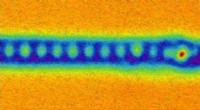
* Electron microscopes have a much higher resolving power, reaching down to 0.1 nm for the most advanced models. This allows them to visualize incredibly small structures like individual atoms.
Factors affecting resolving power in electron microscopes:
* Wavelength of the electron beam: Electrons have much shorter wavelengths than visible light, enabling them to resolve smaller features.
* Lens quality: The quality of the electromagnetic lenses used to focus the electron beam directly impacts resolving power.
* Specimen preparation: The way the sample is prepared can affect the quality of the image and thus the resolving power.
Types of electron microscopes and their resolving power:
* Transmission Electron Microscope (TEM): Typically has a resolving power of 0.1 - 0.2 nm.
* Scanning Electron Microscope (SEM): Resolving power can vary, but generally ranges from 1 nm to 10 nm.
In summary: Electron microscopes offer significantly higher resolving power compared to light microscopes, enabling us to visualize structures at the atomic level. This makes them indispensable tools for research in various fields, including materials science, biology, and nanotechnology.